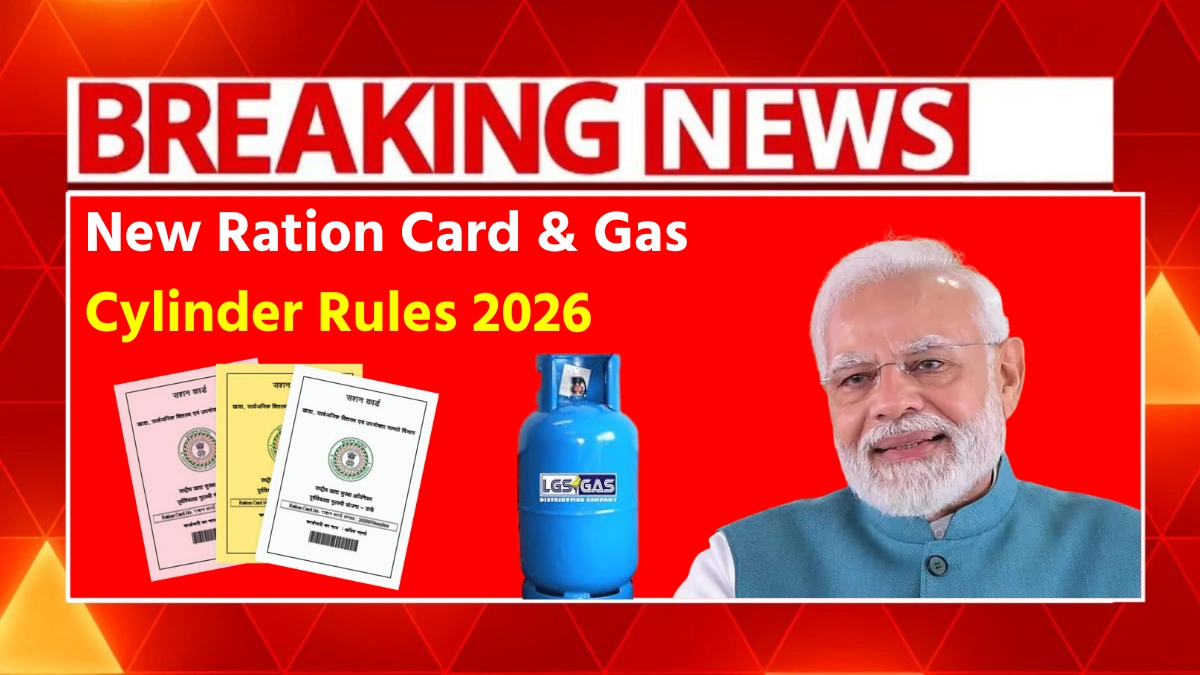
Ration Card & Gas Cylinder Rules 2026: Starting January 21, 2026, millions of households across India will face important updates to ration card and LPG cylinder rules. These changes are not minor tweaks but major reforms designed to make the system more transparent, fair, and digitally secure. If your family relies on subsidized food grains or LPG cylinders, these rules directly affect your daily life. Understanding them now will help you stay prepared and avoid disruptions in essential supplies.
Income Limit Expansion Benefits Families
The government has raised the annual income limit for ration card eligibility to ₹1.2 lakh in several states. This expansion means more families from lower-middle-income groups can now qualify for subsidized grains. Rising food costs have been a burden, and this change offers relief to households that previously fell just outside the eligibility bracket. By widening the net, the government ensures that genuine beneficiaries are included while still keeping the system focused on those who need it most.
Digital Verification Becomes Essential
From January 21, e-KYC verification is mandatory for all ration card holders. This step ensures that only genuine beneficiaries continue to receive subsidized grains and LPG subsidies. Families must complete their digital verification process to avoid disruption in services. The move is part of the Digital India initiative, making welfare schemes more secure and reducing duplication or fraud. It also streamlines the process, cutting down paperwork and ensuring faster access to benefits.
Aadhaar Linking Secures Subsidies
LPG subsidies will now only be credited to Aadhaar-linked bank accounts. This change eliminates middlemen and delays, ensuring direct benefit transfer. If your LPG connection or ration card is not linked to Aadhaar, you risk losing subsidies. Linking Aadhaar is now not just recommended but mandatory. This step strengthens transparency and ensures that benefits reach the rightful households without leakage. It also helps the government track distribution more effectively, preventing misuse of resources.
Food Distribution Gets Adjusted
The quantity of rice and wheat distributed under ration cards has been revised. The government has adjusted allocations to balance demand and supply more effectively. While the exact distribution may vary by state, the focus is on ensuring fair access to essential grains for all eligible families. This change is expected to streamline the system and reduce wastage while keeping affordability intact. Families will need to check their local ration shops for updated distribution details.
Extra LPG Refills Bring Relief
Under the Ujjwala scheme, beneficiaries may now receive two free LPG refills annually. This is a significant boost for rural and low-income families who often struggle with fuel costs. By offering additional refills, the government aims to encourage cleaner cooking practices and reduce dependence on traditional fuels like wood or coal. It’s a step toward better health and sustainability for millions of households, ensuring that every family can cook safely without worrying about rising fuel prices.
Focus on Women Empowerment
One of the hidden strengths of these reforms is their impact on women. Since most ration cards and LPG connections are registered under women’s names, these changes directly empower them. Extra LPG refills reduce the burden of collecting firewood, while digital verification ensures women’s identities are recognized in welfare systems. By linking subsidies to Aadhaar, women gain more financial control, as benefits flow directly into their accounts. This reform is not just about food and fuel—it’s about dignity and empowerment.
Rural Households Gain Stronger Support
Rural families often face challenges in accessing government schemes due to distance, lack of awareness, or bureaucratic hurdles. The new rules simplify access by making verification digital and subsidies direct. Extra LPG refills are especially beneficial in villages where traditional fuels dominate. Adjusted food distribution ensures that rural ration shops can serve families more efficiently. These reforms collectively strengthen rural households, making welfare schemes more inclusive and impactful.
Transparency Builds Public Trust
For years, ration card and LPG distribution systems have faced criticism for corruption and leakage. The 2026 reforms aim to rebuild trust by making the process transparent. Aadhaar linking, digital verification, and revised distribution policies reduce opportunities for fraud. Families can now track subsidies directly in their bank accounts, ensuring accountability. This transparency not only benefits households but also strengthens public trust in government welfare programs.
Technology Drives Efficiency
Technology is at the heart of these reforms. Digital verification, Aadhaar linking, and direct benefit transfers are all powered by modern systems. This reduces paperwork, speeds up processes, and ensures accuracy. Families no longer need to depend on middlemen or worry about delays. By embracing technology, the government is modernizing welfare schemes, making them more efficient and user-friendly. For households, this means faster access to essentials and fewer bureaucratic hurdles.
Urban Families Also Benefit
While rural households are the primary focus, urban families also gain from these reforms. Rising food and fuel costs affect city dwellers too, and expanded income limits bring relief to lower-middle-class families in urban areas. Digital verification is easier in cities, where internet access is widespread. Aadhaar-linked subsidies ensure that even urban households receive benefits without delays. These reforms are designed to be inclusive, covering both rural and urban needs.
Preparing for January 21
Households must act quickly to adapt to these changes. Completing e-KYC verification, linking Aadhaar to bank accounts, and checking updated ration distribution details are essential steps. Families should also confirm their LPG connections are Aadhaar-linked to continue receiving subsidies. By preparing now, households can avoid disruptions and ensure smooth access to food and fuel benefits. January 21 is not far away, and readiness is the key to staying secure.
Final Word: Ration Card & Gas Cylinder Rules 2026
The new ration card and LPG cylinder rules starting January 21, 2026, mark a major shift toward transparency, digital security, and inclusivity. With income limits raised, mandatory e-KYC, Aadhaar-linked subsidies, adjusted food distribution, and extra LPG refills, households must stay updated to continue enjoying benefits. These reforms are designed to ensure that subsidies reach the right people while promoting fairness and efficiency. For families across India, adapting to these changes is essential to keep their daily essentials secure.
Disclaimer: This article is for general informational purposes only. Policies may vary by state. Readers should verify official government notifications before making decisions regarding ration cards or LPG subsidies.