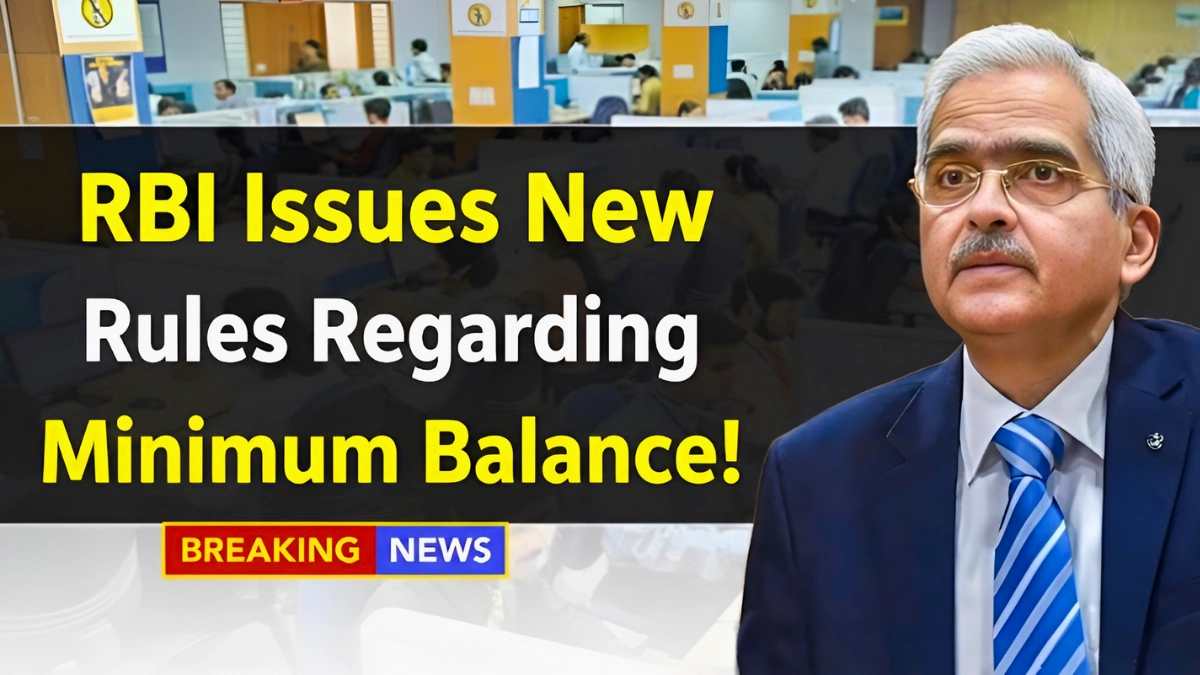
Minimum Balance Rule 2026: For years, minimum balance rules have quietly affected the daily financial lives of Indian bank customers. A missed balance requirement often resulted in penalty charges that felt unfair, especially for people managing tight monthly budgets. In 2026, this long-standing issue is finally seeing a major shift. The Reserve Bank of India has introduced strong customer-focused directions that are changing how banks handle minimum balance norms. SBI, PNB, and HDFC Bank customers across the country are now experiencing genuine relief, making savings accounts simpler, safer, and more user-friendly.
RBI Pushes Banking With A Human Touch
The RBI’s 2026 approach clearly signals that banking should work for people, not against them. By encouraging banks to ease minimum balance pressure, the regulator is addressing one of the most common customer complaints. The goal is to ensure that savings accounts remain inclusive and practical for all income groups. This move also reflects RBI’s broader vision of strengthening trust in the banking system while reducing unnecessary financial stress on everyday account holders.
Minimum Balance Anxiety Finally Eases
For many customers, the fear of dropping below the required balance has always hovered in the background. Unexpected expenses like medical bills, school fees, or home repairs often led to penalties that felt harsh. The new relief helps reduce this anxiety. Customers can now use their own money more freely without worrying about silent deductions. This shift transforms savings accounts into what they were meant to be—a safe and flexible place to manage personal finances.
SBI Customers Get Long Awaited Comfort
State Bank of India account holders are seeing some of the most impactful benefits under the 2026 changes. SBI’s zero balance and relaxed savings account structure now feels more secure than ever. Customers from rural, semi-urban, and urban areas can maintain accounts without the constant fear of penalties. For millions who depend on SBI for salaries, pensions, and government benefits, this update removes a major source of frustration and builds stronger confidence in the bank.
PNB Aligns With Customer First Banking
Punjab National Bank has also stepped up under the RBI’s guidance. The bank is steadily simplifying its minimum balance policies to reduce the burden on customers. Lower balance requirements and fairer penalty rules are making PNB accounts easier to manage. This is especially helpful for small business owners, self-employed professionals, and families who rely on PNB for daily transactions. The bank’s renewed focus highlights a shift toward long-term customer satisfaction rather than short-term fee collection.
HDFC Bank Adjusts Private Banking Norms
Private banks have traditionally followed stricter minimum balance rules, and HDFC Bank has been no exception. However, the 2026 environment is encouraging change. HDFC Bank is reworking its savings account policies to ensure better transparency and reasonable penalties. While some premium accounts may still have balance requirements, customers are now receiving clearer communication and improved flexibility. This adjustment reflects a growing understanding that even private banking must remain customer-friendly.
Relief Reaches Urban And Rural India
One of the strongest aspects of the new minimum balance relief is its nationwide impact. Customers in villages, small towns, and big cities are all benefiting. Rural customers with irregular income patterns gain stability, while urban professionals enjoy peace of mind during high-expense months. This balanced approach ensures that banking reforms are not limited to select regions but truly reach the diverse financial realities of India.
Financial Inclusion Gets A Real Boost
The RBI’s move is also a big step forward for financial inclusion. When minimum balance penalties are reduced, more people feel encouraged to open and maintain bank accounts. First-time account holders, students, and low-income families can now participate more confidently in formal banking. This helps strengthen digital payments, government benefit transfers, and savings habits, all of which are essential for a growing and modern economy.
Everyday Banking Becomes Simpler
With reduced penalty pressure, customers are likely to use their savings accounts more actively. Regular UPI payments, small digital transactions, and online bill payments become easier without balance worries. Customers may also keep more money in their accounts instead of withdrawing cash to avoid penalties. Over time, this change can improve overall banking engagement and support the country’s push toward a cash-light economy.
Banks Shift Focus From Penalties
The 2026 minimum balance relief also changes how banks operate internally. With less reliance on penalty income, banks are expected to focus more on service quality, digital innovation, and customer retention. Better apps, faster support, and value-added products may become the new competitive edge. This shift benefits customers directly while encouraging banks to build healthier, trust-based relationships.
What Account Holders Should Check
Even with RBI-led relief, savings account rules can still differ based on account type and location. Customers should review updated terms from their respective banks to understand the exact benefits. Official bank notifications, branch visits, and customer care channels provide the most accurate information. Staying informed ensures that customers fully enjoy the relief without confusion or missed details.
Long Term Impact On Banking Culture
Over time, these changes may reshape India’s banking culture. Savings accounts could become more customer-centric, transparent, and accessible. Reduced fear of penalties encourages better money management and long-term savings behavior. For banks, it creates an opportunity to rebuild trust and loyalty in a highly competitive market. The 2026 update may well be remembered as a turning point in everyday banking norms.
Final Word: Minimum Balance Rule 2026
The Minimum Balance Rule relief of 2026 marks a meaningful shift in Indian banking. With RBI guiding banks toward fairer practices, customers of SBI, PNB, and HDFC Bank are finally experiencing real comfort and flexibility. Lower penalties, clearer policies, and improved transparency make savings accounts more practical for daily life. This change is not just a regulatory update, but a positive step toward a more inclusive, stress-free, and customer-focused banking future.
Disclaimer: The information provided in this article is for general informational purposes only. Banks’ policies may change, and readers should verify details with official sources before making financial decisions.