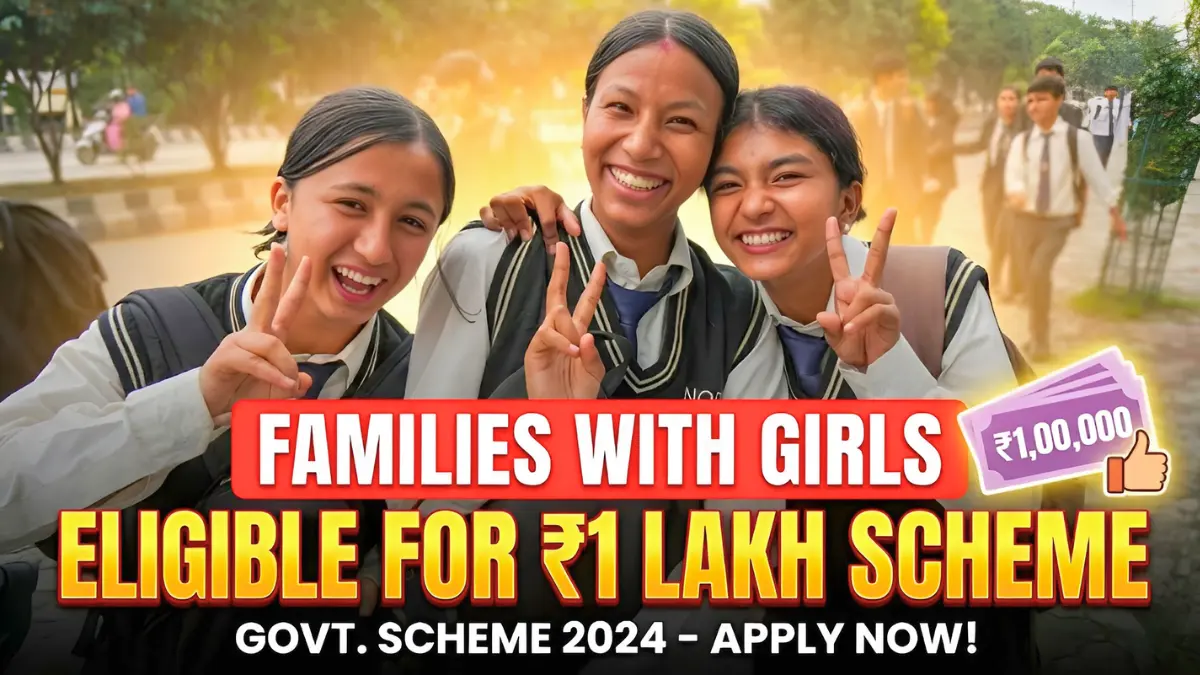
Girls’ ₹1 Lakh Scheme 2026: The Girls’ ₹1 Lakh Scheme 2026 is emerging as one of the most talked-about government initiatives for families with girl children. At a time when education costs are rising and long-term financial planning feels uncertain, this scheme offers structured monetary support to secure a girl’s future. The focus is not just on financial help, but on encouraging education, stability, and independence. Parents across India are actively searching for clear, reliable information, and this article explains the scheme in a simple, Google Discover–friendly way.
Financial Support With A Purpose
This scheme is designed to provide meaningful financial backing at different stages of a girl child’s life. Instead of a one-time payout, the benefit is usually linked to important milestones such as school enrollment, higher education, and adulthood. This approach ensures that families use the funds for the child’s growth and learning. The long-term structure helps build a savings base that can support education or career plans later.
Who Qualifies Without Confusion
Eligibility under the Girls’ ₹1 Lakh Scheme 2026 is kept straightforward to avoid confusion. The applicant must be a girl child who is an Indian citizen and meets the age criteria defined by the scheme. Most versions focus on newborns or minor girls. Income limits may apply so the benefit reaches deserving families. In many cases, a maximum of two girl children per family are allowed under the scheme.
Benefits That Add Real Value
The biggest attraction of this scheme is the total benefit that can reach up to ₹1 lakh. However, the amount is usually released in phases rather than all at once. Smaller installments may be provided during early education years, while the final amount is often credited when the girl reaches adulthood. This ensures financial discipline and motivates families to support continuous education and personal development.
Education Linked To Every Rupee
One of the strongest features of this scheme is its education-first approach. Installments are often tied to school attendance, academic progress, or completion of specific classes. This structure reduces dropout rates and promotes higher education among girls. By linking money with learning, the scheme encourages parents to prioritize schooling and skill development instead of early marriage or discontinuation of studies.
Documents That Decide Approval
Having the correct documents ready can make or break the application. Commonly required documents include the girl child’s birth certificate, parents’ Aadhaar cards, income certificate, and bank account details. Aadhaar-linked bank accounts are usually mandatory for direct benefit transfer. School certificates may be needed for later installments. Accurate and complete documents help ensure faster verification and approval.
Application Process Made User Friendly
The application process for the Girls’ ₹1 Lakh Scheme 2026 is increasingly digital. Most states and authorities provide online portals where parents can register, fill in details, and upload documents. Offline options may still exist through local government offices or Anganwadi centers. Once submitted, the application goes through verification before approval. Applicants can usually track status online, making the process transparent.
Payment Timeline You Should Know
Payments under this scheme do not happen overnight, but they follow a defined timeline. Initial benefits may be released shortly after approval, while later installments depend on meeting conditions like age or education milestones. Funds are transferred directly into the registered bank account to avoid delays and misuse. Keeping bank details updated is essential to ensure smooth credit of funds.
Mistakes That Cause Rejection
Many applications get delayed or rejected due to avoidable errors. Incorrect personal details, mismatched names across documents, or inactive bank accounts are common problems. Missing deadlines is another major reason for rejection. Parents should carefully read official guidelines before applying and double-check all entries. Relying only on official notifications helps avoid misleading information.
State Level Differences Explained
Although the core idea remains the same, different states may implement this scheme under different names and rules. Some states may offer higher assistance, while others may have stricter income limits. Application dates, portals, and eligibility conditions can also vary. Checking state-specific guidelines is essential before applying to ensure compliance with local requirements.
Why Parents Are Paying Attention
The growing popularity of this scheme reflects a shift in mindset toward securing a girl child’s future. Families see it as a combination of savings, education support, and social security. The structured nature of the scheme provides confidence that the money will be available when it is most needed. This makes it appealing to both urban and rural households.
Final Word: Girls’ ₹1 Lakh Scheme 2026
The Girls’ ₹1 Lakh Scheme 2026 stands out as a forward-looking initiative that blends financial assistance with social responsibility. By encouraging education, reducing financial stress, and promoting long-term planning, it creates real value for families and society. Parents who understand the eligibility rules, prepare documents carefully, and apply on time can fully benefit from this opportunity. For families focused on building a secure future for their daughters, this scheme offers strong and timely support.
Disclaimer: This article is for informational purposes only. Eligibility, benefits, and application details may vary by state. Always verify with official government sources before applying to the Girls’ ₹1 Lakh Scheme 2026.