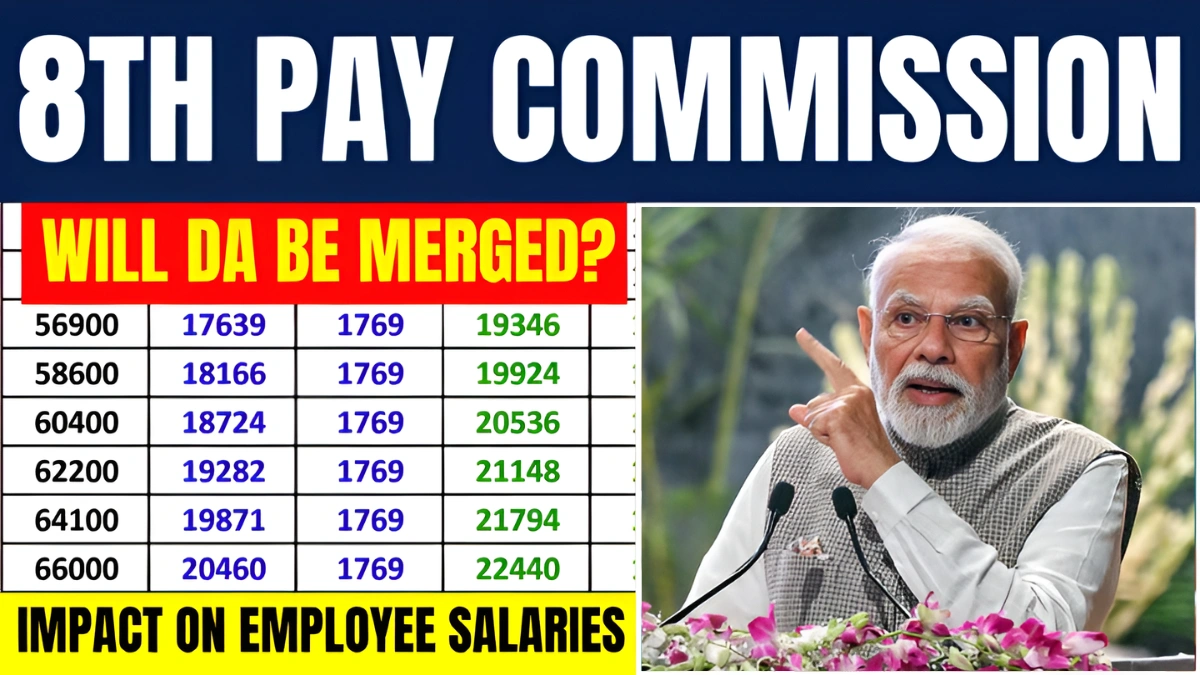
8th Pay Commission 2026 Update: Discussion around the 8th Pay Commission 2026 has moved from casual talk to serious expectations among central government employees and pensioners. Rising inflation, higher household expenses, and years of dependence on Dearness Allowance have created strong demand for a structural pay revision. The biggest talking point is the possible DA merger, which could permanently raise basic salary and pension. This update explains what is expected, why it matters, and how it could change monthly income in a practical and realistic way.
8th Pay Commission Brings Big Hope
The 8th Pay Commission is expected to redefine pay structures for lakhs of government employees. Like earlier pay commissions, its goal will be to balance employee welfare with economic realities. By 2026, DA levels are expected to be relatively high, making a fresh pay revision more meaningful. Employees see this commission as an opportunity for long-term income correction rather than short-term relief through temporary allowances.
DA Merger Changes the Game
DA merger is considered the most powerful tool in a pay commission revision. When DA is merged into basic pay, it stops being a separate allowance and becomes part of the salary foundation. This matters because most other benefits are calculated on basic pay. Once merged, future increments, allowances, and pensions automatically increase, creating a permanent financial advantage instead of a monthly adjustment that resets every time inflation changes.
Salary Hike That Feels Real
A DA merger under the 8th Pay Commission can result in a salary hike that employees actually feel in hand. Unlike small periodic DA increases, merging DA into basic pay lifts the entire pay structure upward. Employees at lower pay levels gain stability, while mid and senior-level staff benefit from a larger base for calculations. This approach supports sustainable income growth instead of short-term inflation correction.
Pensioners Get Long-Term Relief
Pensioners are expected to be major beneficiaries if DA is merged before pay revision. Pension is directly linked to basic pay, and any increase in basic pay has a direct impact on monthly pension. For retired employees facing rising medical and living costs, this change can bring long-term financial comfort. A higher basic pension also ensures that future DA hikes are calculated on a stronger base.
Fitment Factor Holds the Key
The fitment factor is a multiplier used to convert old basic pay into the new pay structure. With accumulated DA likely to be significant by 2026, expectations are high for a revised fitment factor. Even a modest increase in this factor can result in a substantial jump in salary and pension figures. Employees closely track this element because it largely defines the final benefit of any pay commission.
Allowances Get Automatic Boost
Once DA merges into basic pay, allowances linked to basic salary see an automatic rise. House Rent Allowance, Travel Allowance, and other benefits are recalculated on the revised basic pay. This creates a ripple effect across the entire salary package. Instead of revising each allowance separately, the DA merger simplifies the system and ensures uniform growth across all components of pay.
Timeline Still Under Watch
While 2026 is widely discussed as the implementation year, the formal process takes time. The government usually constitutes a pay commission well before the deadline to study economic data and submit recommendations. Approval, notification, and implementation follow in phases. Even if there is a delay, past trends show that arrears are often paid, ensuring employees do not lose financial benefits due to timing issues.
Economic Balance Drives Decisions
The government’s final decision on DA merger and pay revision depends on economic conditions. Inflation rates, revenue growth, and fiscal discipline play a crucial role. At the same time, employee spending power contributes to economic growth through consumption. A well-calculated pay commission recommendation can support both employee welfare and broader economic stability, making the DA merger a financially strategic move.
What Employees Should Expect Now
At this stage, employees and pensioners should focus on understanding the structure rather than exact figures. Official announcements will provide clarity on DA merger percentage, fitment factor, and revised pay scales. Until then, financial planning should remain cautious and realistic. Staying informed through credible updates helps avoid misinformation and prepares households for upcoming changes.
Final Word: 8th Pay Commission 2026 Update
The 8th Pay Commission 2026, combined with a possible DA merger, has the potential to deliver one of the most impactful salary and pension revisions in recent years. By strengthening basic pay, the government can ensure long-term financial security for employees and pensioners alike. While final decisions are still awaited, current signals suggest a strong move toward sustainable income growth rather than temporary relief. For millions of families, this revision could redefine financial stability for the coming decade.
Disclaimer: This article is for informational purposes only. Figures, dates, and policies mentioned are subject to government approval and official notifications. Readers should verify details before making financial decisions.